
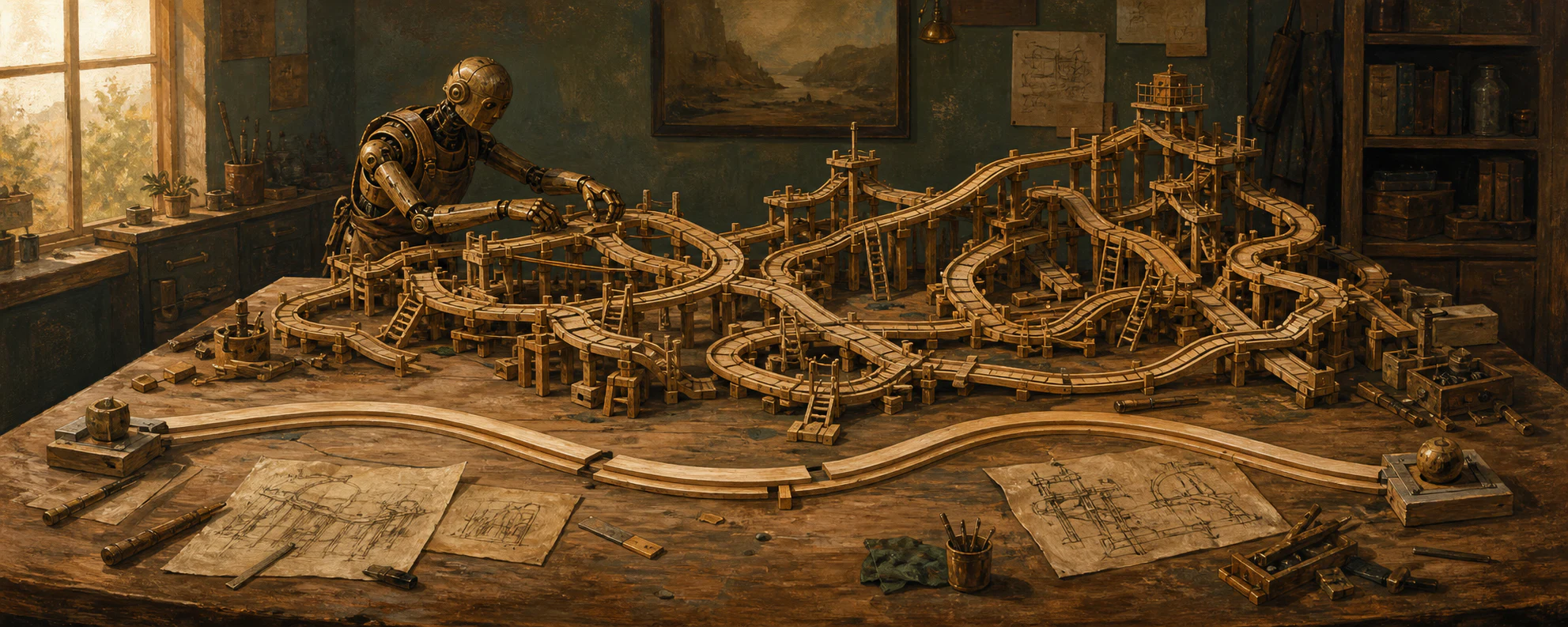
My experience with GPT-5.6 Sol at extra-high thinking is that it will do almost anything I ask—and usually get the job done.
The weakness appears when the plan starts to break down.
It rarely stops to ask whether the original approach was wrong, whether the architecture is becoming absurd, or whether the result will still be maintainable when it’s finished. Instead, it treats every new problem as a mandatory side quest: investigate it, solve it locally, and keep moving.
The final result often works extremely well. It may also take five times longer than necessary and leave behind a system far more complicated than the problem required, because the model never stepped back and replanned.
To be clear, GPT-5.6 Sol is extraordinarily capable. Its default execution style just doesn’t scale without careful prompting and the occasional reminder to zoom out. It needs to be told explicitly that “finish the task” includes periodically questioning the plan: Does the original architecture still fit the problem? Has the scope drifted? Is there now a simpler path?
The human still has to watch for scope creep and prevent the model from turning every obstacle into infrastructure. I’ve already seen projects that help with this, such as the Ponytail plugin, which effectively forces the model to behave like a lazier programmer—in this case, a very good thing.
But the larger point is almost comical: we’ve reached a stage where my main criticism of a coding model is that it does too much, too eagerly, and gets trapped in local problem-solving silos. A good harness could address most of that, even before the next generation of models arrives.
What a time to be alive.


Comments
0Comments are reviewed before they appear.
No comments yet.
Leave a commentModerated before publishing